How was the Diocese of Connor created?
This is a potted history of the Diocese of Connor and some of the dates are approximate. However, a full account of the development of the Church of Ireland and in particular of the Diocese of Connor can be found in Churches of the Diocese of Connor - An Illustrated History by the late Ernest V Scott. Much of the material here has been extracted from this publication.
431AD Although there is little direct evidence of a Christian community in Ireland Pope Celestine 1 sent Ireland its first Bishop, Palladius
432AD Patrick returned to Ireland and his work made a great impact on the country. Much of what we know about him may be legend but we do know that he founded the metropolitan church in Armagh in
444AD. The way Patrick organised the church was similar to that in Britain and Gaul with a structure of Archbishops, Bishops and Priests in charge of churches.
700AD By this time monasteries, rather than churches, were the centre of church life. Armagh ceased to be the metropolitan centre for the Irish Church and became a monastery along with Bangor, Clonard, Clonmacnoise, Durrow and many other places.
1000AD There were still Bishops who were subject to the Abbot. By this time the former Bishops had merged into three main groups, Connor, Dunlethglas or Down and Dromore.
1100AD The Synod of Rath-Breasil divided Ireland into 24 Diocese and apart from a brief period Connor Down and Dromore continued as separate entities until 1441.
1441AD At this time John Cely, Bishop of Down and John Fossard, Bishop of Connor, both petitioned the King to have the Dioceses united at the next vacancy. The petition went to the Pope and eventually John Fossard was appointed as Bishop of both Connor and Down. Many legal arguments concerning the appointment were mounted, however the union was not disturbed for 500 years.
1839AD The Rev Thomas Drew, incumbent of Christ Church in Belfast, formed the Down and Connor Church Accommodation Society and in the four years it existed it made 20 grants, 16 to build Churches or Chapels of Ease, two to help complete buildings already started, one to help purchase an existing building as a Chapel of Ease at St Anne’s, Belfast, and one to help the rebuilding of Holywood Parish Church.
1842AD A number of administrative reforms were introduced including the union of Dromore with Down and Connor
1861AD The Belfast Church Extension and Endowment Society was formed. Thirty thousand people in Belfast were members of the Church of Ireland but the existing churches could only hold 7,500 people. Their aim was to provide more churches and more clergy and through their efforts seven new churches were built.
1869AD The Irish Churches Act received Royal Assent and became law in 1871. This disestablished the Irish Church ending the union with the Church of England. This was because the British Government felt that the Church of Ireland could no longer be a state church as it represented only 12 per cent of the population. The Church of Ireland was left in possession of those cathedrals, churches and church schools then in use. It was left with its Bishops and clergy and the funds to pay them but not their successors. This meant steps had to be taken to re-endow the churches for future incumbents. From disestablishment the Church of Ireland population in Belfast increased dramatically from 46,000 to 118,000 in 1911.
1925AD At General Synod it was proposed a committee be created to establish if it was desirable to divide the Diocese of Down, Connor and Dromore and how this should be done. Pressure had been mounting for such a move due to the increases in population and clergy. It was decided that Connor should be separated from the others. There were major financial constraints as the northern dioceses had major expenses but not the money to fulfil their obligations. Various funds were set in place to try and address this problem. The war also delayed proceedings.
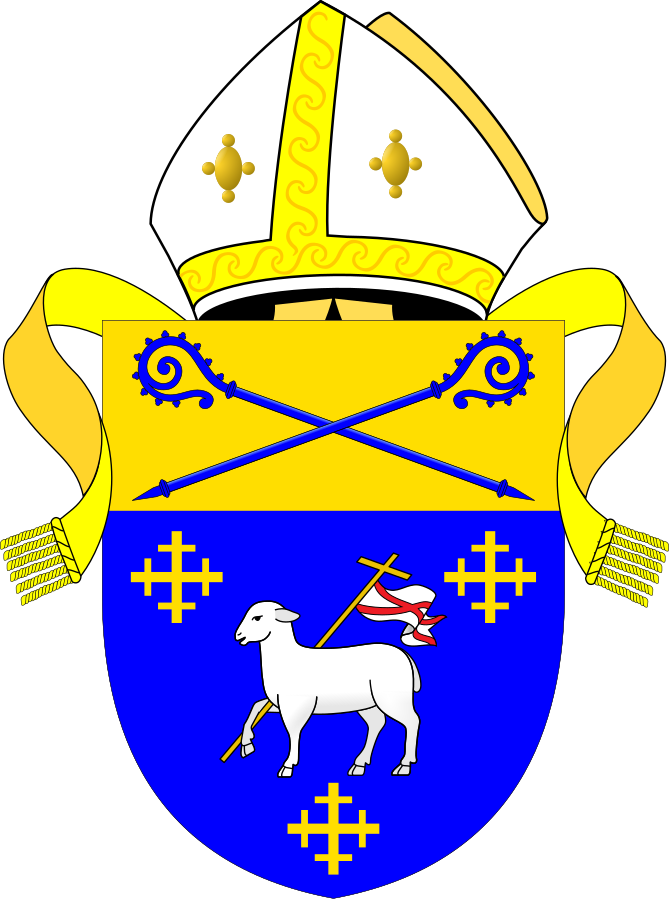
1945AD The final acts were completed and from January 1 1945 the two Diocese of Down and Dromore and Connor became separate units and Bishop Charles King chose to retain the Connor Diocese. Application was made to the College of Arms for a new Grant of Arms for the See of Connor. The diocese is the biggest in Ireland covering 1,700 square miles. It was divided into 10 Rural Deaneries as it is today. It had the immediate task of rebuilding churches destroyed or damaged during the war.